Sports Movements that Put Demand on your Knees
ORTHOPAEDIC OPINIONS BLOG
Mr Vipin Asopa
January 2026
At one time or another, most athletes will have come away from a match or training session with aches and pains in their knee or the surrounding area. With the knee being such a crucial mechanism in the body, a lot of the demand and impact that a sports person takes ends up being centred around the knees, particularly in sports that require certain movements.
That’s why I thought I would take the opportunity to explore these movements a little further in this blog post.
MOVEMENTS IN SPORTS
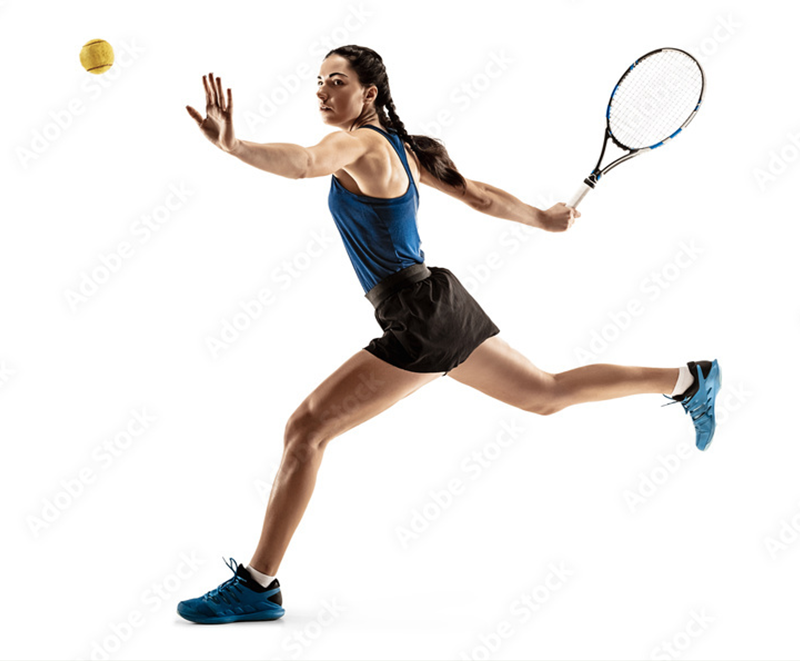
Though they are different sports, tennis, badminton and padel have similarities in the movements a sports person will make during a match. On their side of the net, an athlete will be running back and forward, side to side, stopping and starting, all of which are movements that can put demand on the knees.
In any given match, you could be making all of the following motions:
- Quick, sharp turns
- Pivoting on one foot, causing the knee to twist
- Sudden stops
- Fast changes in direction
- Running from side to side
- Running forwards or backwards
- Stretching up on one leg to reach the ball with your racket
- Lunging to reach the ball
- Crossing over your feet as you run sideways
- Jumping for the ball
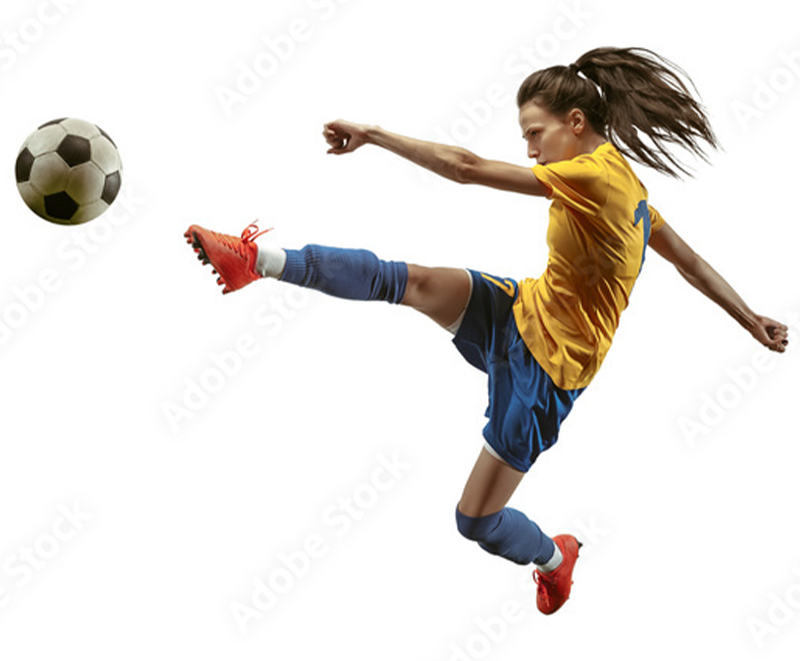
Contact sports including football, rugby and hockey have some expected movements such as running and jumping, but also some unpredictable motions from being tackled and the way you kick the ball.
- Kicking the ball repeatedly
- Jumping and landing on both feet
- Landing on one foot
- Diving or sliding for the ball
- Being tackled and landing on your knees
- Being tackled and kicked in the knee or general leg area
- Stopping the ball with your knee while jumping
- Quick, sharp turns
- Pivoting on one foot, causing the knee to twist
- Sudden stops
- Fast changes in direction
- Running from side to side or forwards or backwards
- Lunging to reach the ball
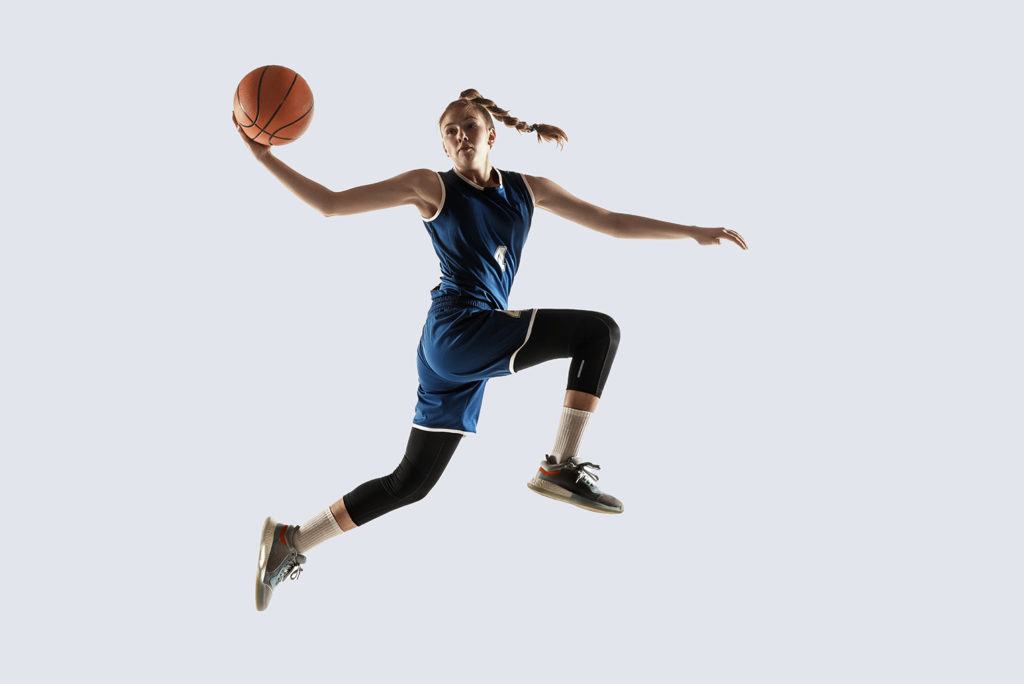
Netball and basketball are centred around running and jumping to catch or intercept the ball, often reaching as high as you possibly can, which can mean quite a forceful landing. As both games are played on a hard court, there may be more of an impact on the knees compared to sports that are played on grass.
If running is your sport, the movement is a more predictable one compared to a team sport, as you will be doing a repetitive motion in each of the strides you take. What may have a variable impact on the knees is whether you run on a hard or soft surfaces.
While sports such as boxing and kickboxing don’t involve running, there are several repetitive knee movements that will be made. With kickboxing, you will be making a twisting motion with the foot that you are standing on, while the other kicks out. And when training, you will likely find yourself running or weight lifting, which also can impact the knees.
SUMMARY
The various different movements detailed above mean that it is so important to stretch and correctly condition the body in order to look after the knee joint. It is also essential to listen to your body, and if you feel that you have increasing pain in your knees, speak to a specialist for advice.
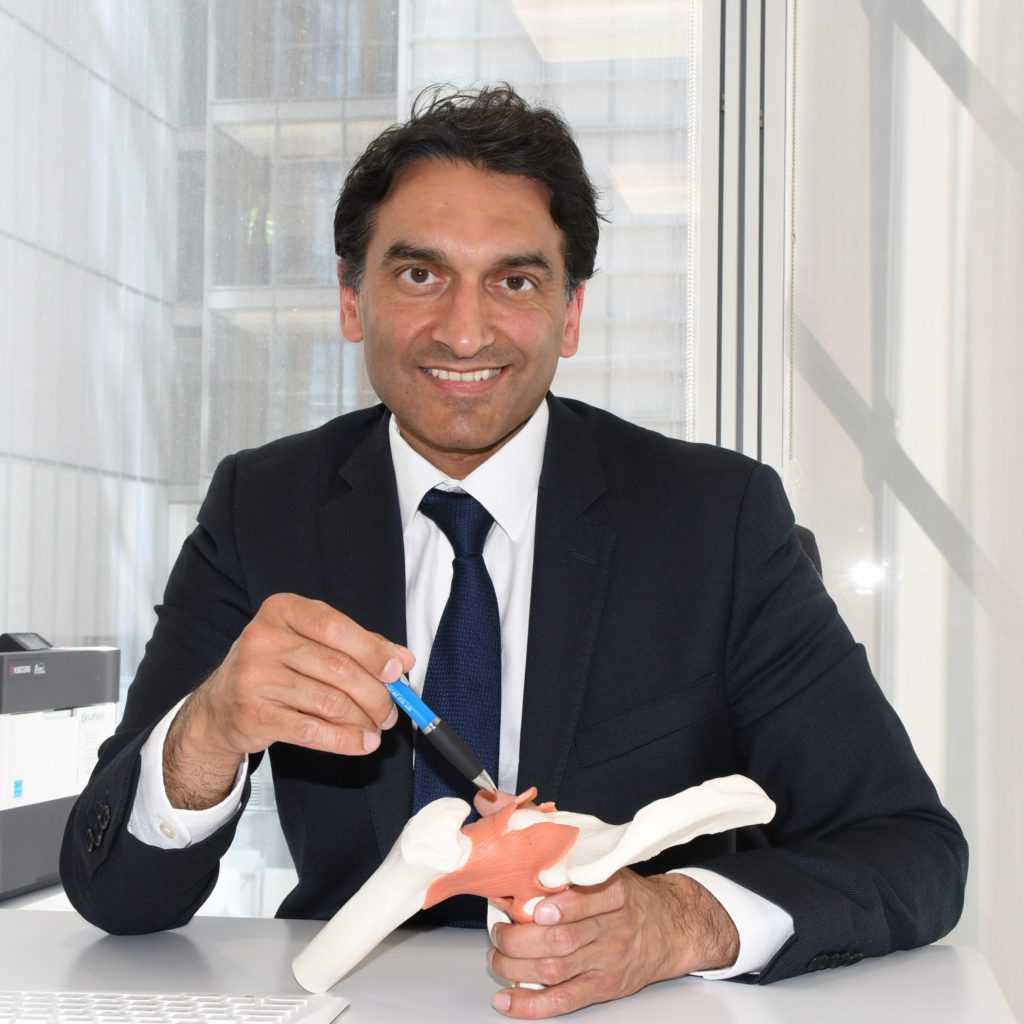
Mr Vipin Asopa, PhD, FRCS (Tr & Orth), MBChB, BSc (hons)
Specialist Consultant Hip and Knee Surgeon in London, with a particular focus on hip pain, knee pain and sports injuries.
Mr Asopa performs numerous surgical procedures including hip and knee joint replacements, arthroscopy, ACL surgery, as well as treating arthritis, ligament injuries, trochanteric pain and more.
To book an appointment with Mr Asopa:
Call: +44 (0) 794 319 1592 | Email: admin@ortho-surgery.uk
The content in this blog is for informational and educational purposes only. The content and information should not be used in any way for a medical assessment, diagnosis or treatment. An appointment should be booked to seek a medical assessment, diagnosis or treatment for your particular needs. The content intends to explore the topic of injury only, and has not been verified as the specific cause of any individual injury. The full blog disclaimer can be found here.