COMMON PADEL INJURIES
ORTHOPAEDIC OPINIONS BLOG
Mr Vipin Asopa
December 2025
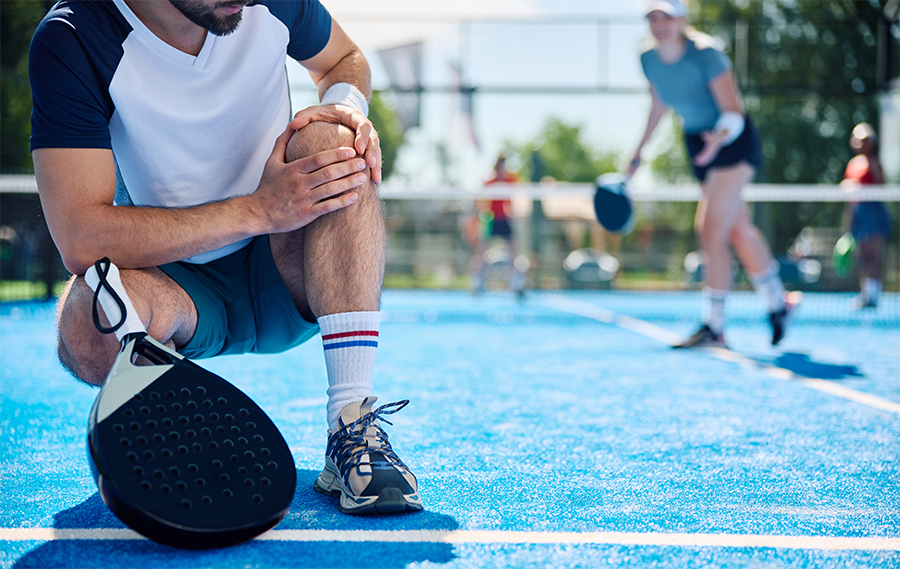
PADEL INJURIES
I recently read that padel was one of the fastest growing sports in the world right now. Up and down the country there are many sports clubs opening new padel courts.
So why is there such an increase in popularity? Well for one thing, it brings people together. It’s sociable, it’s new and fun, and it can be enjoyed by people of all skill levels and a wide age range. And of course it is a great way to work out as it it’s fast-paced.
It is the latest hobby for many of the Formula 1 drivers, with Max Verstappen, Lando Norris, and Carlos Sainz often seen playing matches on the padel courts. A good way to channel their competitive nature when they are not on the racing track!
I have posted recently about injuries in tennis and football and other sports, so with padels’ popularity increasing, I thought it would be beneficial to discuss potential injuries as, like with any sport, injuries are a possibility.
MOVEMENTS IN PADEL
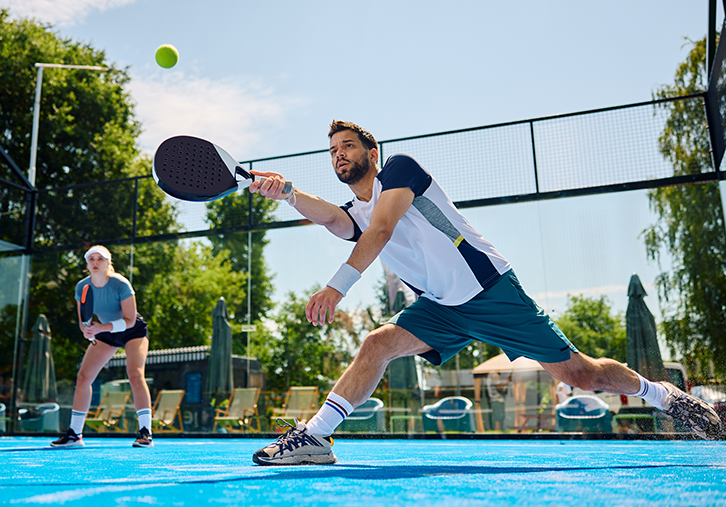
There are many movements you will make during a game, and these will often be quick motions during a fast-paced rally. Here are the key movements, followed by the ways these could cause an injury:
- Pivoting from your feet
- Jumping
- Crossing over your feet as you step
- Twisting from the hips
- Lunging for the ball
- Diving towards the ball
- Stretching up or out to reach the ball
- Stopping abruptly
TYPES OF KNEE INJURIES IN PADEL
So how might these movements cause an injury?
Any of these motions could cause someone to slide, fall, over-stretch the knee, aggravate a pre-existing injury or condition such as arthritis, or put general wear and tear on a particular area of the body.
Injuries that this could cause include:
Patellofemoral pain syndrome/PFPS (Runner’s knee)
The jumping and twisting motions in padel have the potential to cause PFPS, a common overuse injury that affects the kneecap and the area surrounding it.
Meniscus tears
Meniscus tears may occur from the abrupt stopping and twisting movements during a game. The meniscus is a piece of cartilage that provides cushioning between the bones in your knee joint.
Anterior cruciate ligament (ACL) injuries
The abrupt stopping and changing direction in a match could cause an injury to the ACL, which is a ligament that helps stabilise your knee joint.
IT (iliotibial) band syndrome
IT band syndrome can occur when this tissue becomes inflamed and irritated due to repetitive movements.
Flare-up of existing injuries
If you have a pre-existing injury that may already be causing weakness or instability in the knee, it is entirely possible that this could flare up from the repetitive movements in padel.
INJURY PREVENTION
While it is not possible to completely remove the chances of injuries, this risk can be reduced by ensuring you warm up properly. Allocate yourself some time to warm up before each match. You could do this alone or it is a good chance to have a catch up with your opponent before you get into the game.
If you’re short on time, you could walk or jog from the car to the padel court, or do a few laps around the court while you wait for the players who are on before you to finish. You could also do the same for a cool down after your match.
When you lunge or jump or pivot in a game, you may find this is straining your leg as these aren’t movements that are made on a day to day basis. So incorporating these dynamic movements into your warm up will also be beneficial.
As with any pain, it is important to listen to your body if you are feeling pain in the knee area and to take a break or speak to an expert if you need to.
If you play regularly, wearing the correct footwear is another way to help to reduce injury. When explaining which shoes to wear for padel, Decathlon explain that, “padel is a sport that is based on a lot of movements and turns, so having the right shoe and sole is necessary to prevent injuries and have a good grip.”
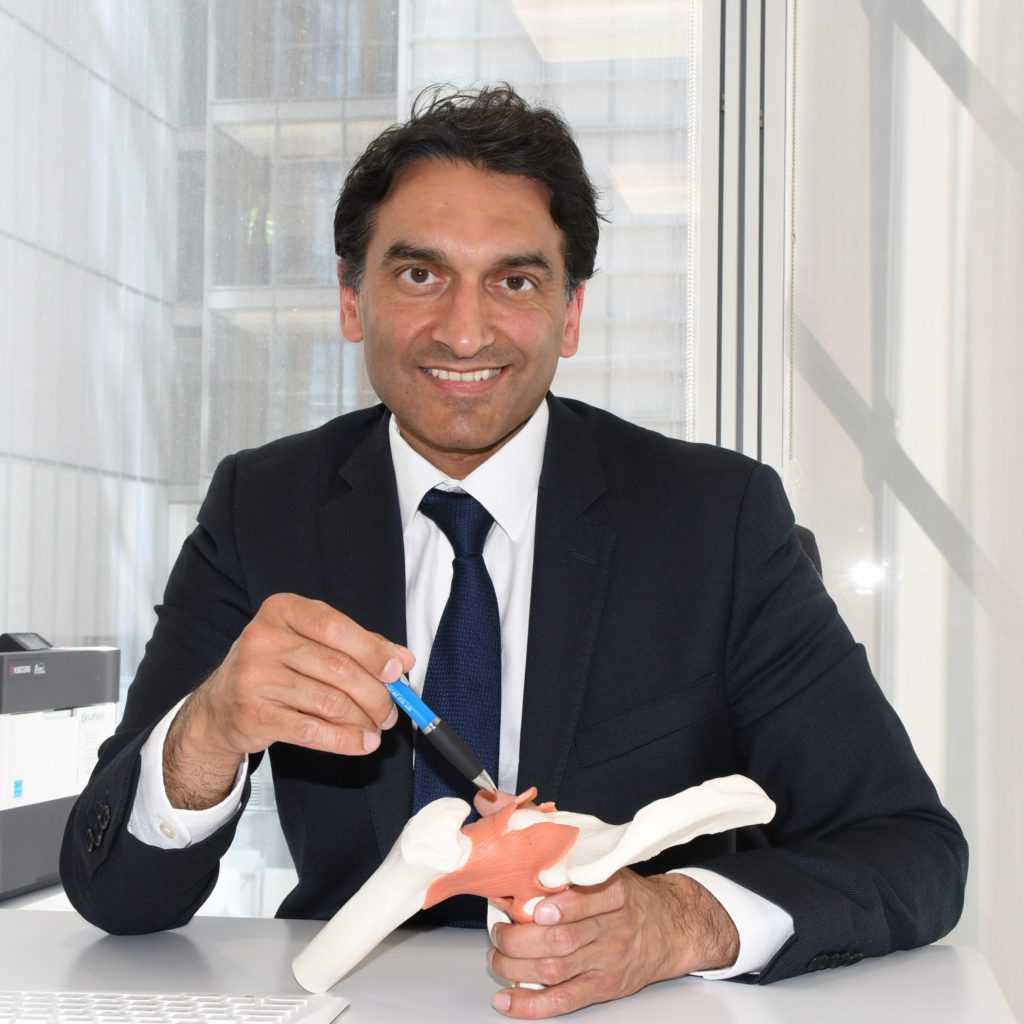
Mr Vipin Asopa, PhD, FRCS (Tr & Orth), MBChB, BSc (hons)
Specialist Consultant Hip and Knee Surgeon in London, with a particular focus on hip pain, knee pain and sports injuries.
Mr Asopa performs numerous surgical procedures including hip and knee joint replacements, arthroscopy, ACL surgery, as well as treating arthritis, ligament injuries, trochanteric pain and more.
To book an appointment with Mr Asopa:
Call: +44 (0) 794 319 1592 | Email: admin@ortho-surgery.uk
Padel player image: Adobe Stock
All content in this blog is for educational purposes only and is not intended as medical advice. The content intends to explore the topic of injury only, and has not been verified as the specific cause of any individual injury. The full blog disclaimer can be found here.